The filing where your buyer names you, and says what it owes you
MSME Form I is the half-yearly return where a buyer names its micro and small suppliers, the amounts outstanding past 45 days, and its own reason for the delay.
The invoice is four months old. You have read the accounts, you have checked the index of charges, and you know roughly where you stand in the queue. All of that told you about the company.
There is one filing that is about you.
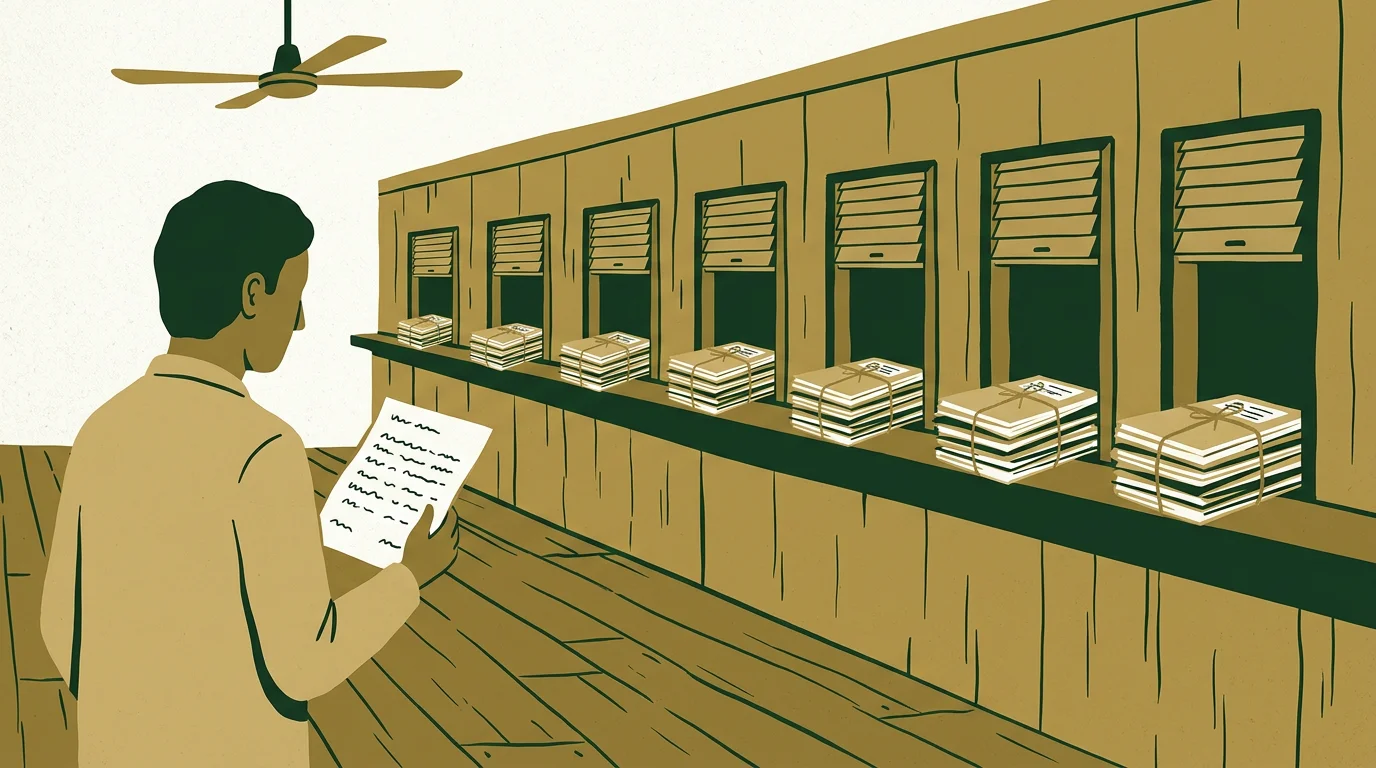
Twice a year, a company that buys from micro and small enterprises and has payments still pending past 45 days has to tell the Ministry of Corporate Affairs about it. Not in aggregate. By supplier, by name, with the amount it admits is outstanding, and with a written reason for the delay.
If you are a micro or small enterprise chasing that invoice, you may be sitting in a row of that table.
What the filing is
MCA calls it MSME Form I. Most people call it MSME-1. It exists because of one order. The instruction kit for the webform opens its section on the governing law by saying so:
Pursuant to order dated 22 January 2019 issued under section 405 of the Companies Act, 2013.
Section 405 is the power that lets the Central Government order companies to furnish information. The order used it to create a return, and it has been amended once since: an amendment order of 15 July 2024 replaced the form outright, and narrowed the obligation so that only companies with payments actually pending past 45 days have to file at all. Everything below describes the form as it has stood since that date. The version in use between 2019 and mid-2024 asked for less: a name, a PAN, an amount due, a date from which it was due, and one reason for the whole return rather than one per supplier.
The kit states the purpose in a single sentence:
All companies, who get supplies of goods or services from micro and small enterprises and whose payments to micro and small enterprise suppliers exceed 45 days from the date of acceptance or the date of deemed acceptance of the goods or services as per the provisions of section 9 of the Micro, Small and Medium Enterprises Development Act, 2006 (27 of 2006), shall submit a half yearly return to the Ministry of Corporate Affairs.
One pointer in that sentence is worth ignoring. Section 9 of the MSMED Act is about promotion and development, not about acceptance. The definitions that matter, the day of acceptance and the day of deemed acceptance where the buyer raised no written objection within fifteen days of delivery, sit in the explanation to section 2(b). The order has pointed at the wrong section since 2019 and the 2024 amendment repeated it.
Two other words do a lot of work. Micro and small. Not medium. If your enterprise is registered as medium, the buyer owes you money but owes MCA nothing about you.
The 45 days is not a grace period the buyer gets to choose. When payment falls due, and what interest runs when it does not, sits in the MSMED Act and in our guide to what the filings show when a customer will not pay. This post is about the paperwork that obligation generates.
What is actually in it
Field 3 is the part that matters. It is a table, one row per supplier:
| Field | What the buyer enters |
|---|---|
| 3(a) | S. No. |
| 3(b) | Name of MSE Supplier |
| 3(c) | PAN of the Supplier |
| 3(d) | Paid within 45 days, split into payments made through TReDS and payments made by any other mode |
| 3(e) | Paid after 45 days |
| 3(f) | Outstanding for 45 days or less |
| 3(g) | Outstanding for more than 45 days |
| 3(h) | Reason for delay in payment / amount outstanding |
Every one of those amount columns is paired with a count of transactions, and the form totals them for you, so a row carries a number of invoices as well as a sum. The TReDS split in 3(d) is quietly informative: it separates what the buyer settled through the receivables-discounting platform from what it paid by any other route.
The kit adds three details that tell you what kind of document this is in practice. Up to 1,000 entries are allowed through an Excel import. The kit asks for a unique PAN on each row. And where the form’s own fields run out of space, the buyer can attach the rest as an optional attachment, so the table is not always the whole story.
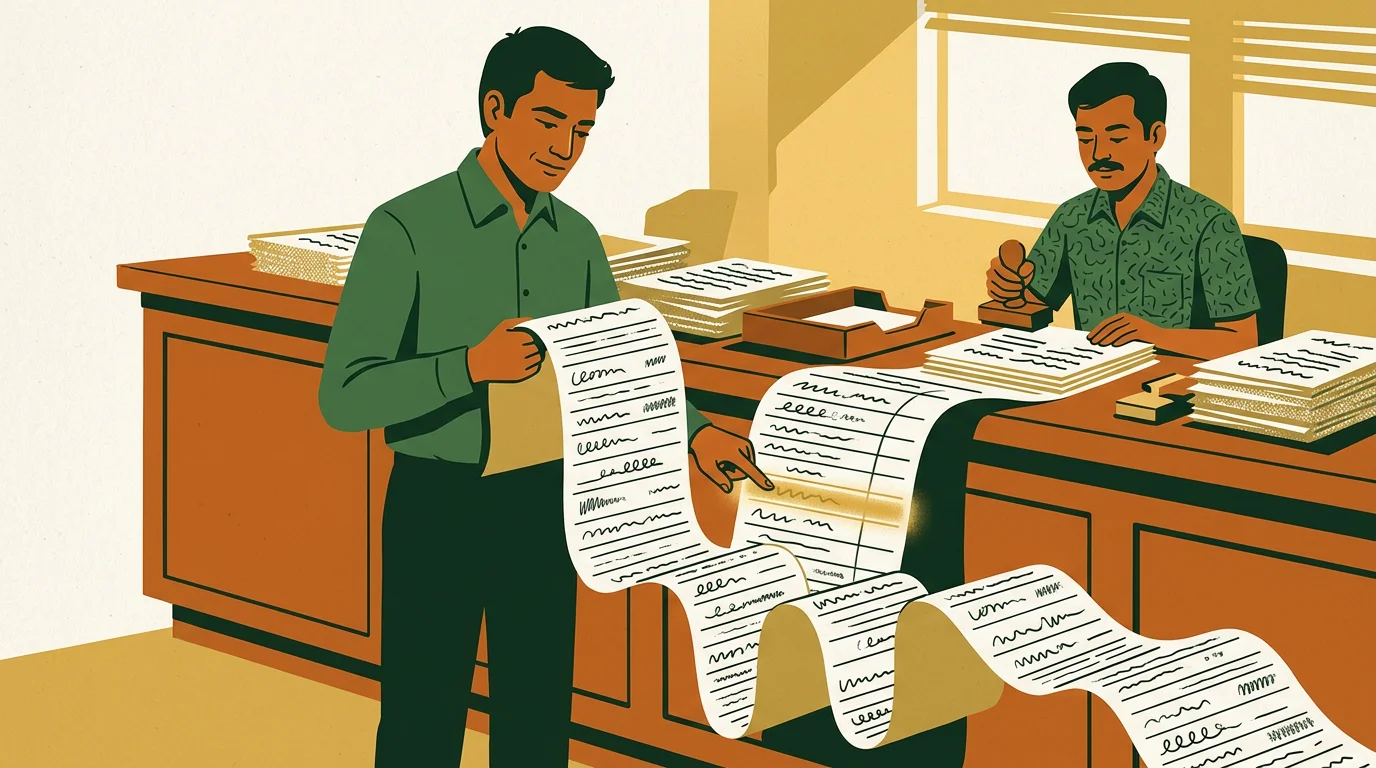
Field 3(h) is the one to read twice. It is a free-text box in which the company that has not paid you writes down why, and files it with the registry. Not to you, not to a court. To the government, in a form it has signed digitally.
The period is fixed rather than chosen. The kit allows a start date of only 1 April or 1 October, and nothing earlier than 1 October 2018. So each return covers a half-year, and a company cannot file twice for the same period unless the earlier return was marked defective in the system.
Filing it costs the company nothing. Under “Fee rules”, the kit says only: “This section is not applicable.” Not filing is a different matter. The form itself points at section 405(4) of the Companies Act, which makes a failure to comply with the order, or information that is incorrect or incomplete in any material respect, a penalty of ₹20,000 on the company and on every officer in default, plus ₹1,000 for each day the failure continues, capped at ₹3 lakh. Nobody scrutinises the return, but the company has signed a declaration that it is true.
How to get hold of one
MSME filings are not published openly, and calling them public documents overstates it. What is true is that they can be bought.
They sit in the Other eForm Documents category of the registry’s View Public Documents service, one of the eight categories the registry makes you request separately. Our guide to downloading MCA documents walks the whole route, including the ₹100 per-company registry fee and the seven-day access window that opens when you pay it.
The registry lists these filings back to 2019, so a company that has been
filing has a run of them. The document list labels the form MSME with a
description of Form MSME, so searching for “MSME-1” will find nothing.
What it will not tell you
Read this before you spend ₹100 expecting a smoking gun.
A named row is not an admitted debt. Field 3 records amounts paid within 45 days, amounts paid after 45 days, and amounts still outstanding. Your name can appear because the buyer reported a payment that is already history. Read the outstanding columns before drawing any conclusion: finding your name does not, by itself, mean the buyer says it owes you anything today.
Nobody read it. The kit is explicit that the webform is processed in STP mode and “shall be taken on record through electronic mode without any further processing”, and there is no provision for resubmission. The form carries the registry’s own formula at its foot: taken on file through electronic mode, and on the basis of the statement of correctness given by the company. The machine checks that the PANs are unique and the signature is valid. Nobody checks whether the numbers are true.
It is half a year behind, at best. A period beginning 1 April does not close until 30 September, and paragraph 3 of the order gives the company until 31 October to file it; the October to March half is due by 30 April. An invoice that went unpaid in May sits inside a window that has not finished, in a return that is not due for five more months. This is the same lag problem that makes a gap in a company’s annual filings hard to read quickly, and it bites harder here, because the period is shorter but the subject matter changes weekly.
Only dues past 45 days appear at all. Columns exist for what was paid within 45 days, but the obligation is triggered by the overdue amounts. A buyer who is late by a month on everything may have nothing to declare.
If your buyer is an LLP, there is nothing to read. The filing duty runs on companies, because section 405 does, and a limited liability partnership is not a company. The payment duty is wider: the MSMED Act puts it on any “buyer”, which it defines as whoever buys goods or receives services for consideration. So an LLP or a partnership firm owes you the money and the interest, and answers to a Facilitation Council, while filing nothing you can look up.
An absence proves very little. If the company has never filed one, that might mean it pays its small suppliers on time. It might mean it has none. It might mean it has simply not filed, which is a different problem, and one that carries its own penalty under section 405(4), though not one you can distinguish from the outside. Treat a missing return as a question, in the same way you would treat any other check on whether a company is what it claims to be.
You will see other people’s suppliers. The table carries other enterprises’ names and tax identifiers. That is a consequence of the form’s design, not an invitation. If you bought it to find your own row, read your own row.
What to do with it
- Work out whether you are in scope at all. Micro or small, registered as such, and owed for more than 45 days from acceptance. If you are medium, this filing is not about you.
- Look for the run, not the document. Filings go back to 2019, so you can compare one half-year against the next. Read the 2024 break carefully, though: returns filed before mid-July 2024 use an older form with fewer columns and a single reason field, so a like-for-like comparison of the 45-day split only works across filings from the second half of 2024 onwards.
- Read field 3(h) before the numbers. The reason for delay is written by the person who owes you money, for an audience that is not you. It is the closest thing to a candid answer you will get without asking.
- Check it against the accounts. Trade payables in the AOC-4 filing should be telling the same story as this return. Schedule III makes the company split its payables into dues to micro and small enterprises and dues to everyone else, and age the MSME dues in buckets from under a year to over three. Where the ageing and the return disagree, the disagreement is the finding.
- Retrieve it properly, once. The fee buys a seven-day window, and the categories are requested one at a time, so decide what you want before you start. Entiva does that retrieval and packages what comes back, which saves the eight passes but changes nothing about what the registry holds.
- Do not treat it as leverage on its own. A stale period and an unscrutinised self-declaration will not carry an argument by themselves. Combined with the accounts and the charge position, they set up a conversation that is much harder to deflect.
The register does not tell you whether you will be paid. It tells you what the company has been willing to put in writing, and when. On the question of an unpaid invoice, MSME Form I is the rare filing where the company has been asked to put you in writing. Read it for that, and not for a confession.
Entiva retrieves MCA filings and organises what comes back. We are not affiliated with the Ministry of Corporate Affairs.
Frequently asked
Is MSME Form I available to the public?
It is not published openly, but it can be bought. MSME filings appear in the View Public Documents service on the MCA V3 portal, under the category Other eForm Documents. Access costs the registry's ₹100 fee per company, needs a registered MCA account, and opens a seven-day window.
Does MSME Form I name individual suppliers?
Yes, in the version of the form in use since July 2024. Its disclosure table carries the name of each micro or small enterprise supplier, that supplier's income-tax PAN, the amounts paid within and after 45 days, the amounts still outstanding, and a reason for the delay against each row. The form in use between 2019 and mid-2024 asked for less.
What happens to a company that does not file MSME Form I?
Section 405(4) of the Companies Act 2013 makes a failure to comply with the order, or information that is incorrect or incomplete in any material respect, a penalty of ₹20,000 on the company and on every officer in default, plus ₹1,000 for each day the failure continues, subject to a maximum of ₹3 lakh. The form carries a note drawing attention to that provision.